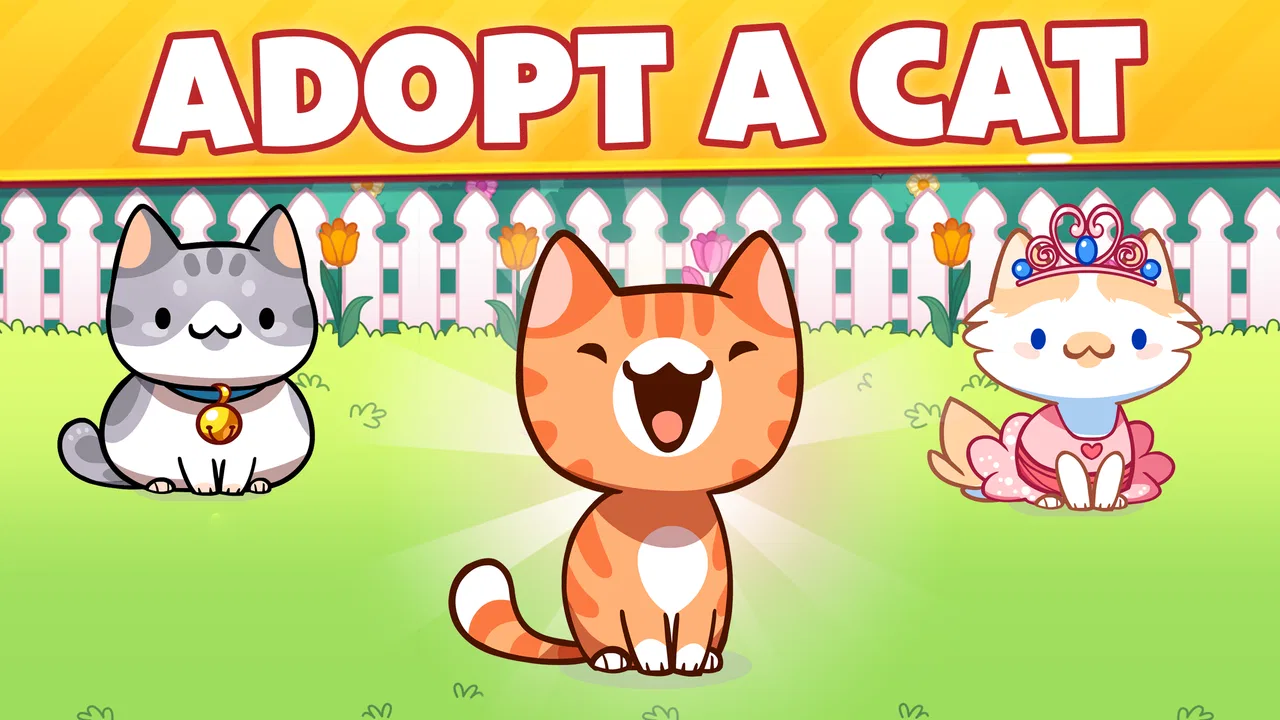
Cat Game - The Cats Collector!
- 4.6
- Rating
- 5.00M
- Installs
- Free
- Price

 Analysis by App-foxy
I spent time with Cat Game - The Cats Collector! as a light, collection-focused game, and my first impression was easy to understand: it is built for short visits, gentle progress, and the simple pleasure of adding another cute cat to your growing group. It sits in the casual game category, is free to download, and comes from Mino Games. That combination makes it approachable, especially if you want something softer and less demanding than a strategy game or a competitive multiplayer title.
The appeal is not really about mastering complicated controls. It is about returning to check your collection, taking part in the rhythm of its events, and deciding how much attention you want to give the game on a particular day. I found that best suited to small breaks: a few minutes while waiting for transport, winding down before bed, or taking a pause between more serious tasks. It has enough structure to give those visits a purpose, but its charm depends heavily on whether collecting virtual cats is the kind of long-term goal you enjoy.
How the collection loop feels in everyday play
The central idea is straightforward: build a collection of cats and keep engaging with the game’s recurring activities. That simplicity is one of its strengths. I never felt that I needed to study a large rulebook before starting. The presentation and theme do much of the work, making the game feel friendly from the first session rather than intimidating.
You May Also Like

 Google Keep - Notes and lists
Google Keep’s Quiet Growth Shows the Appeal of Simpler Notes
As mobile work gets busier, Google Keep keeps winning a simple contest: capture a thought quickly, find it later, and get on with the day.

 Blood Strike: 2.5 Anniversary
Blood Strike’s Loadouts Turn Every Drop Into a Tactical Gamble
A close look at Blood Strike’s custom loadouts: how fast access to signature weapons reshapes its battle royale rhythm, rewards preparation, and narrows the gap between fights.

 Pandora - Music & Podcasts
Pandora’s Music Is Easy to Start, but Harder to Recover
Pandora’s strength is its low-effort path from a seed to a station. Its weak spot is how much confidence it asks you to place in connection, setup, and quiet recovery.

 8 Ball Pool
 Is Built on Rivalries, Rematches, and Routine
A close look at the rivalries, rematches, shared routines, and unanswered safety questions that turn a quick pool match into a persistent mobile community.

 Samsung Music
’s Quiet Strength Is Playing What You Already Own
Its reach comes less from spectacle than from dependable access to a personal library. That simplicity is both the app’s strongest retention engine and its ceiling.

 AccuWeather: Weather Radar
AccuWeather Review: A Quick, Clear Forecast for Everyday Decisions
For everyday plans, the best forecast is the one you can understand quickly. AccuWeather makes rain timing, radar, and local conditions easy to act on, with a few trade-offs.
More From Our News Desk



What makes the loop more lasting than a one-time novelty is the sense of an unfinished collection. Each new cat gives a small reason to return, while weekly events add a changing target instead of leaving the experience completely static. I like this approach for casual play because it gives me something to check without demanding a long uninterrupted session. A player who enjoys completion goals can treat the collection almost like a personal album, while someone less committed can simply enjoy the cats that arrive naturally.
A realistic use case is a busy weekday. I might open the game during a coffee break, see what has changed, work toward a small collection goal, and close it again without feeling that I have abandoned a major mission. Later, I can return when I have more time. That flexibility is more important than it sounds: many games in this area either become repetitive immediately or push the player into longer sessions, while this one is easier to fit around an ordinary schedule.
There is also a useful distinction between liking cats as a theme and liking collection games as a habit. The cute presentation may attract you, but the long-term experience depends on whether repeated checking and gradual accumulation feel rewarding. If you prefer action, deep tactics, or a clear story with a definite ending, the same relaxed structure may feel thin. I would not choose it as my main game when I want challenge or a strong sense of dramatic progression.
What the weekly rhythm adds
The weekly events are important because they give the collection a changing focus. Without that kind of rotation, a collecting game can become a checklist that I open only out of habit. Here, the event rhythm creates a reason to look again and decide whether the current goal is worth pursuing. I appreciate that it turns the game into something more seasonal in feeling, even when I only have a short amount of time available.
My practical advice is to avoid treating every event as an obligation. The game is more pleasant when I choose one or two goals that fit my schedule rather than trying to chase everything. That approach also helps with spending decisions, because a limited-time objective can make any free-to-play game feel more urgent than it really is. If an event does not appeal to me, skipping it is a healthier choice than turning a relaxing game into a source of pressure.
Another useful habit is to decide what kind of player you are before getting deeply involved. If you want a complete collection, you may naturally spend more time planning your sessions and watching event progress. If you are playing for relaxation, it is better to accept that your collection will grow at its own pace. I found the second approach more comfortable, especially because it keeps the game from competing with real-world priorities.
Free access and the spending question
The game is free to play, but it includes optional in-app purchases ranging from $0.99 to $99.99 per item. That is the key purchase context I would want a friend to know before installing it. The range covers both small impulse purchases and a very large top end, so I would set a device-level spending limit before handing the game to a child or using it as a casual family pastime.
I cannot fairly claim that paying is required, or that purchases guarantee a particular result, because those conclusions would go beyond what I could establish. What I can say is that the presence of purchases changes how I approach the collection. I play the free portion first, decide whether the ordinary loop is enjoyable on its own, and only then consider whether any optional purchase would genuinely improve my experience.
My spending rule is simple: treat every purchase as entertainment, not as a shortcut to a promise. If I feel annoyed because an event is moving slowly, that is usually a sign to close the game rather than pay immediately. The cute theme can make a purchase feel harmless, but small decisions can add up, and the highest listed item price is substantial for a casual game. I would also avoid buying while tired, distracted, or trying to recover progress after missing an event.
For parents, the free label should not be read as meaning that the game has no financial considerations. The age rating is Everyone, which makes the theme broadly accessible, but adults should still review purchase controls on the device. That is not a criticism unique to this game; it is a sensible step whenever a child can access optional digital items. I would explain clearly that the cats are virtual collectibles and that spending is never a requirement for having a good time.
Progress, pressure, and the question of fairness
Collection games naturally create a little tension between patience and urgency. The collection is more satisfying when new cats feel earned, but recurring events can also make me feel that I am falling behind if I do not check in often. Cat Game works best when I treat its progress as a relaxed hobby rather than a duty. The moment I start measuring my enjoyment against a complete collection, the gentle atmosphere becomes less convincing.
One of the more useful ways to play is to separate personal progress from event progress. My collection can remain a long-term project, while a weekly event is only a temporary opportunity. That distinction prevents a missed week from feeling like permanent failure. It also makes the game easier to recommend to people with irregular schedules, because they can return without needing to pretend that every event must be completed.
The main pressure point is psychological rather than mechanical: limited-time activities and attractive collectibles can encourage quick decisions. I would pause before spending and ask whether I still want the item after waiting a day. If the answer is no, it was probably the event’s urgency—not the value of the purchase—that was driving me. This small pause is especially helpful in a game designed around adorable rewards.
On fairness, I would be careful with strong claims. I would not label the game pay-to-win because the experience is centered on collecting rather than a competitive victory system. At the same time, I would not promise that every player has identical access to every collectible or event outcome. The sensible conclusion is narrower: spending may matter to how quickly or conveniently a player pursues the collection, while the game itself is not something I would approach for serious competitive fairness.
That makes the game different from a competitive battle game, where paid advantages can directly affect another player’s result. Here, the more relevant comparison is with other collection and idle-style casual games. Cat Game has a warmer, more specific identity because the cats are the reason to return. A generic puzzle game may offer clearer skill-based satisfaction, and a traditional single-player adventure may provide more control over pacing, but neither necessarily offers the same ongoing album-like appeal.
Who should play, and who should skip it
I would recommend it to someone who likes cute themes, gradual collecting, and games that can be opened for short sessions. It is also a reasonable choice for a player who wants a low-pressure alternative to action-heavy mobile games. The Everyone rating supports its broad, family-friendly positioning, although I would still keep purchases in mind when children are involved.
I would be less likely to recommend it to someone who needs a clear finish line. A collection game can feel endless by design, and that is enjoyable only if the ongoing process is the reward. I would also suggest skipping it if you dislike recurring events, dislike free-to-play purchase prompts, or want a game where success depends mainly on skill rather than patience and continued participation.
Players who want a competitive ranking system should look elsewhere. The appeal here is personal accumulation and changing activities, not proving that one player is better than another. Likewise, if you want a deep economy with detailed optimization, this may not provide enough complexity. Its accessible design is a benefit for casual users, but it can become a limitation for people who want layers of strategy.
Device expectations and long-term confidence
The game supports Android devices using version 5.0 or later, so its stated compatibility reaches a wide range of phones and tablets. The current version is 1.99.1788, which is useful to check before troubleshooting an installation or comparing your experience with someone else’s. I would keep the app updated through the normal store process, particularly when a game relies on recurring events and ongoing content.
Its popularity gives me some confidence that it has found a lasting audience: it has passed 5 million installs, with an average rating of 4.6 from around 92 thousand ratings and about 21 thousand written reviews. Those figures do not replace personal judgment, but they do suggest that the basic collecting formula works for many players. I still read recent user comments before committing to long-term play, because broad approval cannot tell me whether the current event rhythm suits my habits.
There are also practical unknowns I would keep in mind. I would not assume that the game offers a particular backup method, account system, offline experience, or purchase-refund arrangement without checking the current store and device information myself. Those details can matter a lot if a collection becomes personally valuable. My advice is to avoid treating virtual collectibles as permanent possessions until I understand how progress is handled on the device I use.
That caution is not meant to undermine the game. It is simply part of reviewing a collection-focused title honestly. The longer I play, the more I care about continuity, and the more important it becomes to know what happens when I change phones, reinstall the app, or take a break. If preserving progress is essential to you, investigate that point before investing significant time or money.
My trust verdict after playing
My overall view is positive, with clear boundaries. Cat Game is a pleasant casual game for people who enjoy cute virtual collections and short, repeatable visits. Mino Games has chosen a focused concept rather than trying to turn the experience into a complicated all-purpose game, and that focus is exactly why it can work as a small daily distraction.
I trust it most when I use it on its own terms: free first, patient progress, optional events, and no expectation that every cat must be collected immediately. I trust it less as a purchase-driven chase, especially when the desire to complete an event starts replacing the original relaxation. The available purchase range means I would put safeguards in place and make spending decisions slowly, particularly for younger players.
The strongest non-obvious lesson from my time with it is that the game is easier to enjoy when I manage my expectations before the collection becomes important. I choose a modest goal, accept missed events, and treat new cats as pleasant additions rather than proof of progress. That workflow keeps the game from turning into a checklist and makes its short-session design feel intentional.
So, would I recommend installing it? Yes, if you want a friendly cat-collecting game that fits around everyday life and you are comfortable with the presence of optional purchases. I would start without spending, play through the ordinary routine, and decide whether the returning-cats-and-events loop genuinely holds my attention. If you want skill-based competition, a finite story, or completely pressure-free collecting, another kind of casual game will probably suit you better.
For the right player, though, the simplicity is the point. I can open it for a few minutes, enjoy the theme, make a little progress, and leave without needing to commit the whole evening. That makes it an easy recommendation for relaxed collectors, as long as the cute presentation does not encourage spending decisions that the player would not make in a calmer moment.
FAQs for Cat Game - The Cats Collector!
01What is Cat Game - The Cats Collector!?
Cat Game - The Cats Collector! is a casual collection and simulation game centered around adorable cats. You build and decorate a cozy village, attract different cats, complete activities, and collect resources to expand your world. The game combines light management, customization, events, and social features, making it suitable for players who enjoy relaxed gameplay rather than fast-paced competition.
02Is Cat Game - The Cats Collector! free to download and play?
Yes, Cat Game - The Cats Collector! can generally be downloaded and played for free on supported Android and iOS devices. However, it includes optional in-app purchases for items such as premium currency, special bundles, or faster progress. You can enjoy the main gameplay without paying, although progress may feel slower if you decide not to purchase additional resources.
03Does Cat Game - The Cats Collector! require an internet connection?
An internet connection is recommended and may be required for several important features, including loading events, synchronizing progress, receiving updates, accessing social functions, and processing purchases. Some basic activities may remain available temporarily while offline, but the experience is designed around online connectivity. A stable connection also helps prevent problems when saving your latest progress.
04What can you do in Cat Game - The Cats Collector!?
The main activities include collecting a wide variety of cats, furnishing and customizing your village, producing or gathering resources, completing quests, and participating in limited-time events. Different cats and decorations give the world a sense of progression, while regular tasks provide reasons to return. The game is especially appealing if you prefer decorating, collecting, and gradual development over difficult challenges.
05Is Cat Game - The Cats Collector! suitable for children?
Cat Game - The Cats Collector! has colorful visuals, simple controls, and cute characters that can appeal to younger players, but parents should still review the game’s content and settings before allowing children to play. Optional purchases, advertisements, online connectivity, and possible social interactions are important considerations. Using device-level parental controls and disabling unauthorized purchases is recommended for family devices.
Pros
- Charming cat designs make collecting feel rewarding.
- Simple controls are easy for players of all ages.
- Frequent events add variety and encourage regular play.
- Decorating spaces gives the game a personal touch.
- Offline-friendly moments make it convenient for casual play.
Cons
- Progress can feel slow without spending premium currency.
- Repeated tasks may become monotonous over time.
- Many rewards and menus can feel overwhelming at first.
- Limited storage or space may require frequent management.
- Some features depend on a stable internet connection.

Cat Game - The Cats Collector!
Gallery